Hans Fallada’s Nightmare in Berlin

30179883

Written and set in Germany just after the end of WWII and the fall of the Nazi regime, this novel is not a pleasant read.  An ambitious country and a proud people drank the Kool-Aid for twelve years, and now lie in ruin.  The German people are almost universally held in contempt; any Berlin building with windows intact is a miracle; conquering armies (Russia, in this instance) are feared.  Conflicts arise between those who supported Hitler and those who did not, and even some of the latter are beginning to view his regime as a time of plenty and, perhaps, to wish for its return.  Understandably in distress, characters show their baser sides, and most are quite dislikeable.

Though this novel is widely considered autobiographical, Hans Fallada (pen name of author Rudolf Ditzen) denied this.  However, his central actor, Dr. Doll, is a German author of note, and most of his story here does seem to parallel that of Fallada, who has been compared to Mann and Hesse.   As Germany struggles with the aftermath of all-out war, Dr. Doll struggles with financial ruin, addiction, frequent hospitalizations, a difficult, much younger wife (also an addict) and the contempt of his neighbors, and, even though Dr. Doll has hopeful moments, you somehow know that he is not convinced.

Yes, this resurrected novel is dark, dark and challenging, but it is important for its contemporaneous look at Germany after the war, for its probing insight into human honesty and deceit, and for the artistry of the work.  Fallada/Ditzen wrote only one more work, Alone in Berlin, before he died in 1947, but Dr. Doll and a fallen Berlin will return to you time after time.

Click here to order Nightmare in Berlin from Amazon.

Full Disclosure:  A review copy of this book was provided to me by Scribe US via Edelweiss in exchange for an honest review.  I would like to thank the publisher and Edelweiss+ for providing me this opportunity.  All opinions expressed herein are my own.

John Burnham Schwartz’s The Red Daughter

I doubt the name Svetlana Alliluyeva means anything to most of us today, but Joseph Stalin’s daughter was a political hot potato when she defected from Mother Russia during the Cold War.  Whether you know of her, and regardless of your knowledge of the Cold War and Russian history, you will tear through this novelization of Svetlana’s life.  Mr. Schwartz writes of her confusing and privileged young life and provides the background to her defection, but the story is primarily that of her life after arriving in the U.S., and it is totally engrossing.

Intelligent, guarded and seemingly hard, Svetlana hides her vulnerability and her past, to the extent that she can or is allowed to; but her life as her father’s child and as an adult under the rigid control of Soviet society leaves her unprepared for Western life and choices.  She is haunted by the two nearly adult children she left behind; the U.S.S.R. tantalizes her with them, and U.S. authorities fear her children will be used to lure or harm her.  There is a brief remarriage, and a baby boy born late in Svetlana’s life.  She adores this child, hides his grandfather’s identity from him until he is a young teenager, and there are traumatic consequences.  You will swear that what you have before you is non-fiction reading as fiction, but, no.  The strength of this work is the story – fiction reading as blisteringly masterful fiction.

Available to everyone on April 30, or pre-order at Amazon.com: The Red Daughter: A Novel

Full Disclosure:  A review copy of this book was provided to me by Random House Publishing Group / Random House via NetGalley.  I would like to thank the publisher and the author for providing me this opportunity.  All opinions expressed herein are my own.

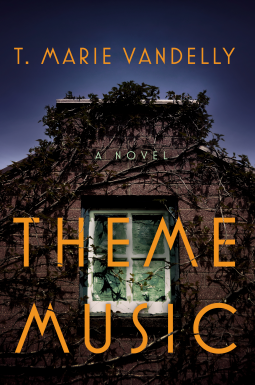
T. Marie Vandelly’s Theme Music

A first novel, a good one, and the title gives nothing away.  I like that.  It’s not a shivery, goose-bumpy title at all, is it, but this is one spectacularly shivery thriller.  Now, you know, I’ve read my share of mysteries and thrillers, and let me tell you that you won’t find fictional murders more horrifying than these.  Not extravagant, opulent murders a la The Da Vinci Code, but murders in a perfectly ordinary kitchen – at breakfast.  One survivor, and this is her story to tell, a story so clever, original and complicated, it’ll have you jumping to conclusions and haring off in all directions.  If puzzling over the evil that men can do appeals, give this one a try.  Thanks, Ms. Vandelly.

Definitely worth pre-ordering wherever you buy books online, as this one doesn’t come out until July 23. A link to Amazon.com is available here: Theme Music: A Novel

Full Disclosure:  A review copy of this book was provided to me by PENGUIN GROUP Dutton / Dutton via NetGalley.  I would like to thank the publisher and the author for providing me this opportunity.  All opinions expressed herein are my own.
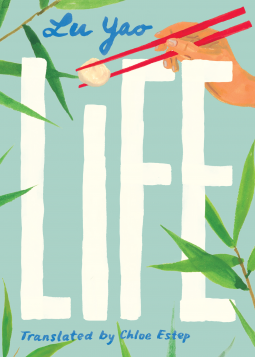
Lu Yao’s Life

What an opportunity we readers have here.  Chinese author Lu Yao had only two published works and died at the age of forty-two, but Life, this superb novella published in 1982 and still a bestseller in China, is now in English translation.  It’s the early Eighties, rural China begins a slow forever change, begins to turn away from the community and culture of eons; and we meet Gao Jialin, the educated son of peasants.  A sympathetic character, he’s lost his prestigious teaching job, lost face, and is in despair.  Lu Yao shares only a brief span of this young man’s life with the wrenching decisions he must make between the known past and the unknown future, a story that portends China’s path from rural to urban.

So very Chinese, yes, but absolutely stunning in its universality.  Human beings, past, present, and forever, have acted and will act as this young man does and as those around him do.  What is loss of face, but pride, hubris?  Do we choose generosity of spirit or cunning ambition?  Betrayal or trust?  What are we but “I want”?  Lu Yao’s quiet work could have played out on a stage in ancient Greece.  And one of the simplest, most beautiful opening paragraphs I’ve ever read begins “On the tenth day of the sixth month of the lunar calendar, the evening sky was…”

Available now at Amazon.com or shop your local indie bookstore

Full Disclosure: A review copy of this book was provided to me by AmazonCrossing via NetGalley. I would like to thank the publisher and the author for providing me this opportunity. All opinions expressed herein are my own.

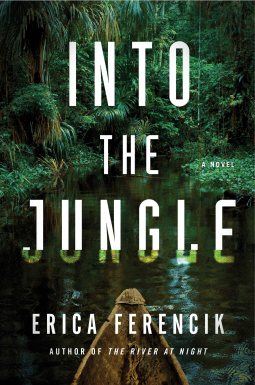
Erica Ferencik’s Into the Jungle

I read this.  Yes, the whole thing, and apparently, the Bolivian experiences of a friend of the author provided the idea behind this novel.  Good to know, that, ‘cause otherwise I’d have launched into a discussion of its utter implausibility.  The prologue nearly stopped me right there and then, that python dream, but I thought maybe that was unfair and soldiered on.  At nineteen, Lily, a lying, thieving survivor of the U.S. foster care system, is stranded in Bolivia, where she meets and falls in love with Omar, a motorcycle mechanic from the jungle.  He is moderately hot.  Soon he is summoned back to his remote village, Lily goes with him, and, after a harrowing plane ride, they arrive.  Here, among showers of tarantulas, Omar transforms, but it’s all good, and how! – from cute mechanic to wise, noble, studly, mighty hunter and savior of his people.  Lily, after some minor cultural adjustment and soon pregnant, attains depths of character and resourcefulness you wouldn’t believe.  Literally.  Shall we say over the top?  Let’s.

There’s a creepy telepathic shaman, a completely gratuitous family of lepers, a slimy poacher whose face is ripped off by a timely eagle, a lovely little pig that gets eaten, and a murderous neighboring tribe who can melt into the jungle and “melt out” of it as well.  Man, it’s hot.  Can we borrow a cup of curare?   But I read this, the whole thing, and there’s the rub.  While “utter implausibility” flashed on and off like a neon sign, I often found myself riding the literary skids of this jungle extravaganza with my hair plastered back, having a big ol’ time.  Readers, casting suggestions for Omar?

The ride begins on May 21 at a bookstore near you.

Full Disclosure: A review copy of this book was provided to me by Gallery, Threshold, Pocket Books / Gallery/Scout Press via NetGalley. I would like to thank the publisher and the author for providing me this opportunity. All opinions expressed herein are my own.
Leonard Goldberg’s The Disappearance of Alistair Ainsworth

This third in the “Daughter of Sherlock Holmes” series was my introduction to Joanna Blalock Watson and her small family, born sleuths, all of them.  Joanna is the flesh and blood daughter of the famous detective, and her father-in-law is the ever-present Dr. Watson.  Her husband, Watson’s son, narrates, and her son Johnny promises to be his grandfather Sherlock all over again.  It’s World War I, so, as you’d expect, there are German spies, zeppelins and U-boats, encryption and experts, clandestine affairs (or not?), and a dastardly traitor.  Who?  (I figured it out; I figured it out!)  There’s even a fake funeral involving a long-dead cat.  Nice touch.

All this gives Joanna ample opportunity to dazzle with that famous deductive reasoning, but, in the Holmes tradition, there can be no rush to judgment.  She moves at a measured pace, dispensing conclusions in small, intriguing doses, and, like her father, is more than a bit condescending to those of lesser gifts……and isn’t that everybody?  While it may be something of a trudge for the modern reader, if you’re a Conan Doyle fan and don’t want to re-read him for the umpteenth time, this is well-done and as close as you can get.  Prefer your detective series in order?  Begin with The Daughter of Sherlock Holmes and follow with A Study in Treason.  This installment makes its appearance on June 11 from Minotaur Books.

Full Disclosure:  A review copy of this book was provided to me by St. Martin’s Press / Minotaur Books via NetGalley.  I would like to thank the publisher and the author for providing me this opportunity.  All opinions expressed herein are my own.


Helen Phillips’ The Need

Helen Phillips, this novel left me reeling.  So real it could be yesterday in my own kitchen, but then so utterly, devastatingly surreal.  Is it alternate realities, or a frazzled mother’s mind unraveling into madness, or is it a wicked human plot?  Or is it creepy with the supernatural and spooky portals to other planes?  Are the children going to die, or are they already dead?   What it is…….is a consideration, a contemplation, if you will, of a mother’s love, so fierce and so fraught with its intensity and its burden.   Tiny Ben and lively Viv (a masterpiece, the most fully realized fictional four-year-old ever), the warm funk of children sleeping, their unremitting needs, tantrums, vomit, Cheerios, yes, and the bone-deep fear of it all.   But make no mistake.  This is not a horror story.  It is a human story.  Helen Phillips, your talent is frightening.

Readers, make haste to your local bookstore (support the independents, please!) to pick this one up on July 9 from Simon & Schuster.  Or to pre-order from Amazon.com, click here: The Need

Full Disclosure: A review copy of this book was provided to me by Simon & Schuster via NetGalley. I would like to thank the publisher and the author for providing me this opportunity. All opinions expressed herein are my own.

Erika Swyler’s Light from Other Stars

Entropy.  Accelerating/decelerating half-life.  De-organizing systems.   I understand nothing.  Science, technology, Earth is mid-Apocalypse, and a failing space ship carries four pioneers to an unnamed planet.  My mind goes “Yadda, yadda, yadda.”  And yet.  And yet….   You must begin in a tiny Florida town, Easter, on the day Challenger explodes.  In a small college lab, an experimental machine named Crucible activates; and time begins to move forward, backward, to slow.  Water freezes, ponds boil and frogs scream, viscous liquid drips from power lines.  Then, in Easter, time stops.

But, you see, this book, this story, does not focus on science and technology, or on an imaginary world.  Rather, it is built around its characters, human beings speaking and thinking as we might, and what treasures they are.  At its core there is Nedda, a prodigiously gifted eleven year old, her mother, a brilliant chemist who bakes experimental cakes and her father, the prof who created Crucible.  No matter that I don’t understand entropy.  What matters is that I will never forget this story and these people.  One of my two best reads so far this year.  Shines as brightly as the light from any star in any galaxy real or imagined.  Hitting bookstores on May 7 (Bloomsbury USA).

Full Disclosure: A review copy of this book was provided to me by Bloomsbury USA / Bloomsbury Publishing via NetGalley. I would like to thank the publisher and the author for providing me this opportunity. All opinions expressed herein are my own.

Dave Robicheaux Returns: The New Iberia Blues

Been hanging out in the Delta with my friend Dave Robichaux.  I don’t know how old Dave actually is now (two hundred three or so?), but he’s still kicking butt, breaking hearts and doing his own yardwork at his peaceful Cajun cottage on the bayou.  No matter.  For the creator of this all-time great detective series, I’ll willingly suspend any disbelief.  The man is a writer.  He can tell a story and write up a storm.

You do know James Lee Burke, don’t you?   If you don’t or you think he’s mass market dross ‘cause he’s on every drugstore rack, get over it and get on with it.  If you’re a returning devotee like me, New Iberia Blues is a good place to jump back in.  If you’re a devotee-to-be, start here or anywhere, or, if you want, go back to where it all began with The Neon Rain.  You will, anyway.   Feel the soft bayou breezes through the window screen, fluttering the curtains just before the storm.

Full Disclosure: A review copy of this book was provided to me by Simon & Schuster via NetGalley. I would like to thank the publisher and the author for providing me this opportunity. All opinions expressed herein are my own.

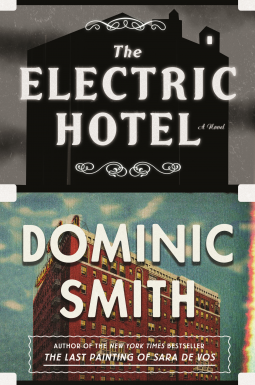
Dominic Smith’s The Electric Hotel

The title?   Didn’t think it sounded too promising, you know; but I was wrong, so very, very wrong; and it was my good fortune to meet an elderly French gentleman, Claude Ballard, living out his life in a rundown Hollywood hotel.  This is not the electric hotel of the title, but it is the same hotel where, according to this novel, D.W. Griffith died.  Turns out, Mr. Ballard has a history in silent film that predates Griffith, and we go back in time to learn about the earliest days and the simplest of films, moving figures in a stream of light.   Here is a man who films his own sister’s death from tuberculosis as he tries to understand and promote this new medium.  Meet Sabine Montrose, a bold-going stage actress who transitions to film and then into exile after starring in a doomed masterpiece.  And Chip Spalding, teenage Australian daredevil, forerunner of all Hollywood stuntmen to come.  Hal Bender from Brooklyn, where he stays a step ahead of trouble eking out a living with nickel peepshows, to studio head where he struggles to stay…………

Unforgettable.  Lose yourself in layer upon rich layer and a stellar cast of characters.  Read Dominic Smith’s lovely new work, you lucky reader, you.  It is truly a find.

The Electric Hotel is not scheduled for release until June 4, 2019 so put this on your calendar.  Not to be missed!!!

Full Disclosure: A review copy of this book was provided to me by Farrar, Straus and Giroux / Sarah Crichton Books via NetGalley. I would like to thank the publisher and the author for providing me this opportunity. All opinions expressed herein are my own.